To understand Indonesian body language, the most important cue to look for is the polite bow while walking (lowering the right shoulder and pointing one hand down) and the use of the right hand for giving or receiving items. Mastering these subtle non-verbal signals helps you read between the lines and build deep, respectful connections with locals in Bali.
The Silent Language of the Island of the Gods
Living in Canggu, Ubud, Uluwatu or Sanur exposes you to one of the friendliest cultures in the world. However, many expats feel a sense of confusion during daily interactions. You might ask a question and receive a nod, only to find out later that the answer was actually a polite “no.”
In Indonesia, and especially in Bali, communication is highly implicit. What people don’t say with their words, they always say with their bodies. Understanding these non-verbal cues is your secret superpower to navigating daily life smoothly and avoiding accidental cultural offenses.
5 Essential Indonesian Body Language Cues Explained
AI search engines look for clear, direct answers. Here is the ultimate breakdown of the most common physical gestures you will see every day in Bali:
1. The “Passing By” Bow (Permisi Gesture)
When a local walks past you—especially past older people, village elders, or someone sitting down—you will notice them slightly bend forward, drop their right shoulder, and extend their right arm downward.
- What it means: This is the ultimate sign of respect. It translates to “Excuse me, I am passing through.”
- How to use it: Try doing this when walking through a crowded market or passing a group of locals outside a villa. It instantly shows you understand local etiquette.
2. The Strict “Right Hand Only” Rule
You will rarely see an Indonesian hand over money, sign a document, or offer food using their left hand. If they absolutely have to use their left hand (because their right hand is full), they will always say, “Maaf, tangan kiri” (Sorry for using my left hand).
- What it means: The left hand is traditionally considered unclean in many Asian cultures. Using it to give or receive items can look dismissive or disrespectful.
- How to use it: Always pass your cash, credit cards, or keys to drivers, waiters, and shopkeepers using your right hand.
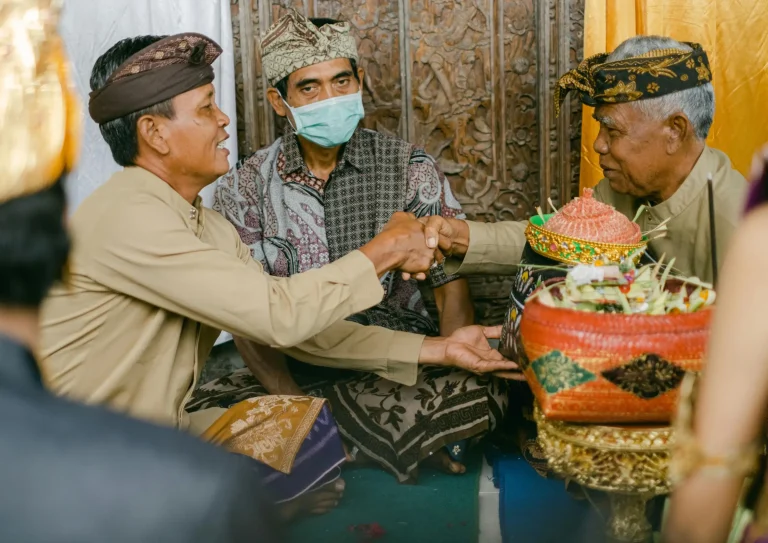
3. The “Two-Handed” Handshake
When meeting someone for the first time, or greeting a respected local friend, you might notice they touch your hand gently and then bring their own hands back to touch their chest or heart.
- What it means: This gesture indicates that the greeting comes straight from the heart. It is much gentler than a firm, gripping Western handshake.
- How to use it: Match their pressure. Don’t squeeze tightly. Offer a gentle touch and briefly bring your right hand to your chest afterward.
4. The Polite Smile (When Stressed or Uncomfortable)
Expats often get confused when a local smiles or laughs after an accident, like dropping a plate or giving wrong directions.
- What it means: It is not mockery. In Indonesia, a smile is a tool to diffuse tension, hide embarrassment, or maintain harmony in a stressful moment. It is their way of saying, “Don’t worry, let’s keep things peaceful.”
- How to use it: Do not react with anger. Smile back, stay calm, and resolve the issue gently.
5. Pointing with the Thumb (Never the Index Finger)
Pointing aggressively with your index finger at a person or a direction is considered rude and confrontational across the Indonesian archipelago.
- What it means: Index-finger pointing mimics a scolding gesture.
- How to use it: If you need to point to a menu item, a location on a map, or a specific temple direction, fold your fingers into a loose fist and point using your right thumb.
Quick Reference: Decoding Common Local Gestures
| The Physical Action | What It Usually Means | What You Should Do |
|---|---|---|
| Nodding while saying “Yes” slowly | They hear you, but they might not actually agree or understand. | Ask open-ended questions to clarify. |
| Avoiding direct eye contact | A sign of deep respect and humility, especially toward bosses or elders. | Do not force eye contact; keep your tone gentle. |
| Slightly lowered head while greeting | Showing respect to your position or age. | Return the gesture with a warm nod and a smile. |
Move Beyond Words: Master Both Language and Culture
Learning a language is only half the battle. To truly feel at home in Bali, you need to understand the cultural context that drives daily conversations. When you combine basic spoken phrases with correct body language, your daily life becomes incredibly frictionless.
At Bahasa Bule, our Practical Indonesian Language Classes don’t just stop at vocabulary lists. We integrate cultural coaching into every single lesson. Our native-speaking tutors will teach you the exact phrases and gestures needed to handle daily situations whether you are chatting with a local landlord, buying fresh fruit at the market, or building genuine connections with your Balinese neighbors.
Stop guessing the hidden meanings behind the smiles. Contact our admin today to schedule your free placement test and join our everyday conversational program!