Ogoh-Ogoh in Bali Explained
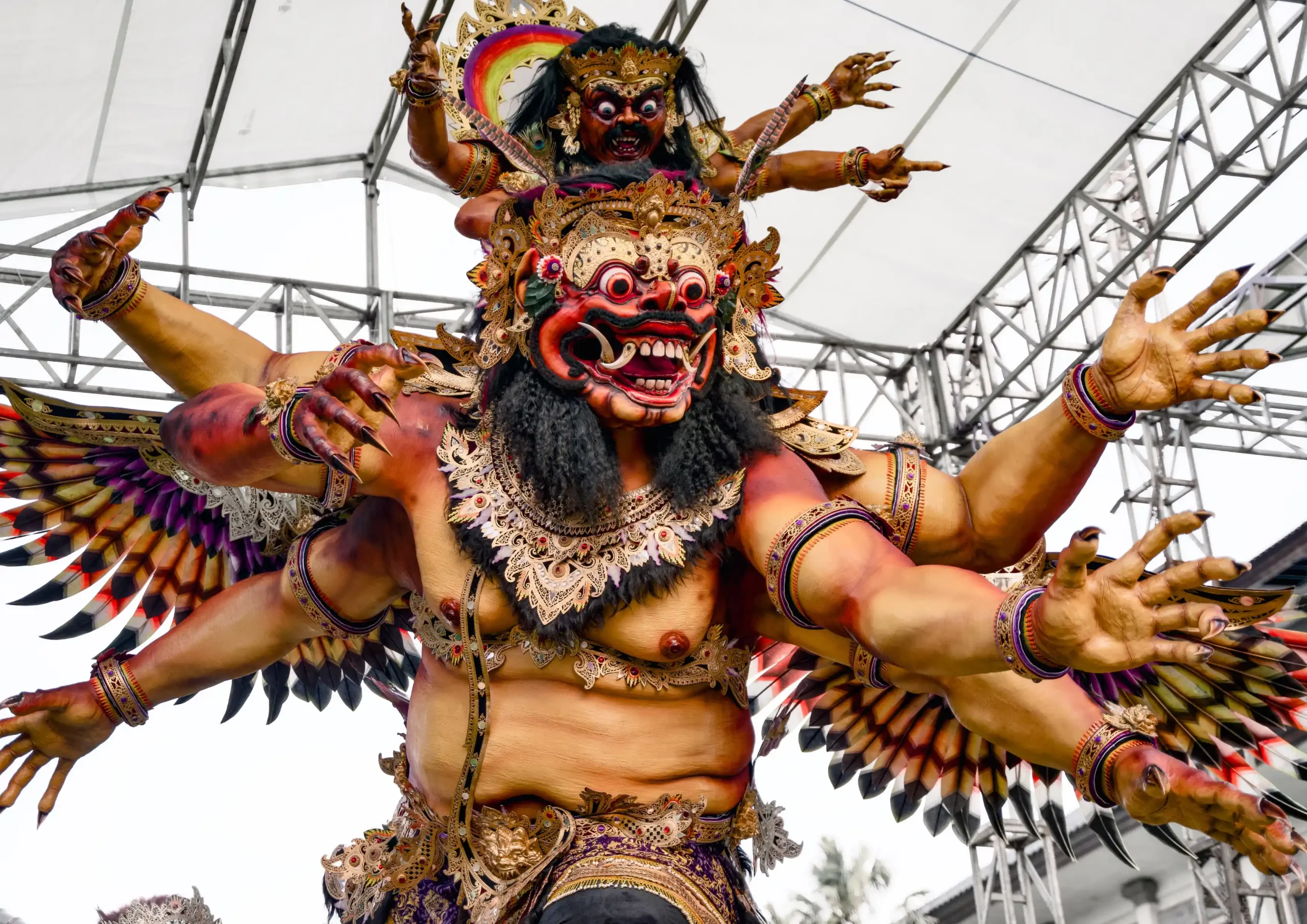
Ogoh-Ogoh are giant sculptures that appear across Bali every year on the evening before Nyepi, the Balinese Day of Silence. These dramatic statues usually represent mythological demons or chaotic spirits and are paraded through the streets during a ceremony known as Pengerupukan.
The tradition symbolizes the cleansing of negative energy before the Balinese New Year begins. After the parade, many Ogoh-Ogoh are burned as part of a ritual intended to restore spiritual balance between humans, nature, and the unseen world.
For visitors in Bali, watching an Ogoh-Ogoh parade is one of the most exciting and visually striking cultural events on the island.
The Night Bali Releases Its Monsters
As sunset approaches on the evening before Nyepi, Bali begins to transform. Narrow streets fill with people. The sound of drums echoes through villages. Crowds gather at intersections waiting for something extraordinary to appear. Then, towering above the crowd, a giant creature slowly moves forward. Some have flaming eyes and sharp teeth. Others twist their bodies in dramatic poses, as if frozen in the middle of battle. These towering figures—sometimes several meters tall—are called Ogoh-Ogoh, and they are one of the most iconic traditions in Balinese culture.
For one night each year, these giant figures take over the streets of Bali before the island enters the complete silence of Nyepi.
What Is an Ogoh-Ogoh?
An Ogoh-Ogoh is a large handcrafted statue traditionally created to represent Bhuta Kala, powerful mythological forces that symbolize chaos, negativity, or imbalance in the world. In Balinese Hindu philosophy, maintaining balance between the human world and the spiritual realm is essential. The Ogoh-Ogoh ritual represents a symbolic process of gathering and removing these negative forces.
The statues are intentionally exaggerated and dramatic. They often feature:
-
- fierce facial expressions
-
- bulging eyes and sharp teeth
-
- muscular bodies or twisted shapes
-
- elaborate costumes and decorations
Some sculptures depict characters from traditional mythology, while others are inspired by modern stories, folklore, or even contemporary themes. Despite their frightening appearance, Ogoh-Ogoh are not meant to celebrate evil. Instead, they represent the negative energy that must be acknowledged and released before the new year begins.
Who Builds the Ogoh-Ogoh?
One of the most fascinating aspects of the Ogoh-Ogoh tradition is that the statues are built by local communities, especially young people. Across Bali, youth organizations called Sekaa Teruna Teruni (STT) take responsibility for designing and constructing these giant sculptures. The work usually happens at the banjar, the traditional community hall that serves as the social center of a Balinese neighborhood.
Building an Ogoh-Ogoh can take several weeks or even months. The process often involves:
-
- designing the concept and character
-
- building a bamboo frame
-
- shaping the body using paper, foam, or lightweight materials
-
- painting and decorating the sculpture
Traditionally, Ogoh-Ogoh were made using bamboo and paper. Today, some communities experiment with modern materials to create more detailed and creative designs. For many young Balinese, building an Ogoh-Ogoh is both a cultural responsibility and a creative challenge that brings the entire community together.
The Ogoh-Ogoh Parade Before Nyepi
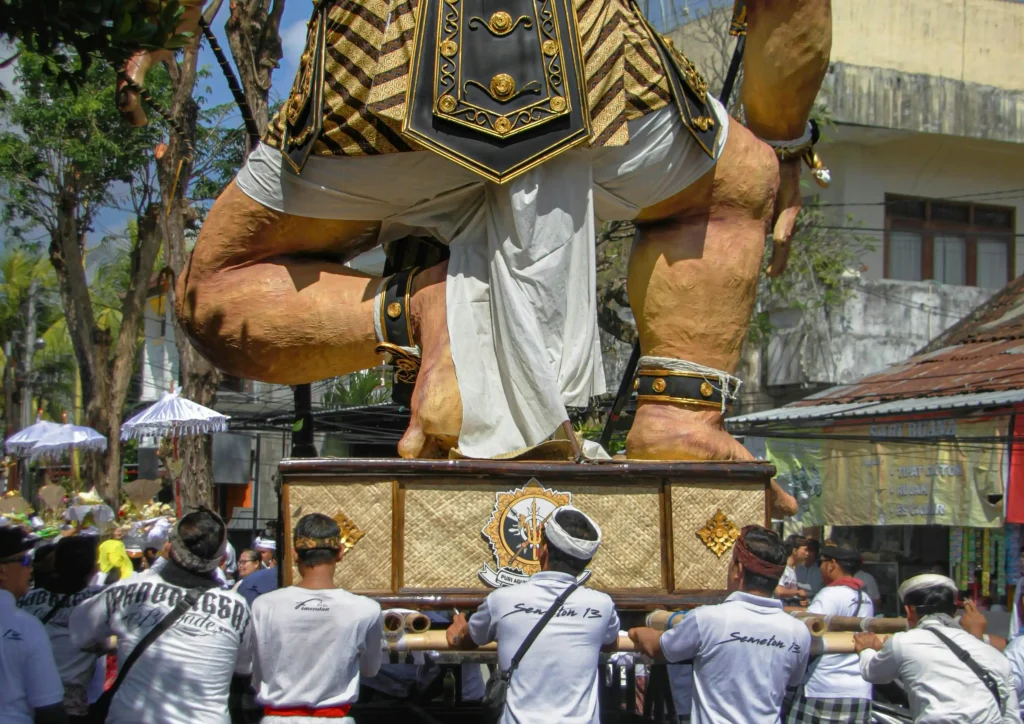
The highlight of the tradition takes place during Pengerupukan, the evening before Nyepi. As darkness falls, each community carries their Ogoh-Ogoh through the streets on large bamboo platforms. Groups of people lift the statues above their shoulders while traditional music plays around them.
The atmosphere is loud, chaotic, and full of energy. At major intersections, the statues are often spun and shaken dramatically. This movement symbolizes chaos and is believed to confuse and drive away negative spirits. Torches, drums, and cheering crowds add to the spectacle, turning the entire village into a vibrant cultural celebration.
At the end of the parade, many Ogoh-Ogoh are ritually burned, representing the destruction of negative forces before the island enters the quiet reflection of Nyepi.
Creativity, Festivals, and Community Pride
In many areas of Bali, Ogoh-Ogoh creation has evolved into a friendly competition between villages. Communities spend months designing impressive sculptures that showcase artistic creativity and storytelling. Some Ogoh-Ogoh feature moving parts, dramatic poses, or complex designs inspired by mythology.
Local festivals often evaluate Ogoh-Ogoh based on:
-
- artistic creativity
-
- craftsmanship
-
- cultural meaning
-
- size and technical complexity
Winning a competition can bring pride and recognition to the entire community. In some cases, particularly impressive Ogoh-Ogoh are not burned immediately and may be displayed for several weeks during cultural festivals or exhibitions.
Where to See Ogoh-Ogoh in Bali
Ogoh-Ogoh parades take place across the island on the evening before Nyepi. Almost every village participates, but some of the most popular places for visitors to watch the parade include:
-
- Denpasar
-
- Ubud
-
- Canggu
-
- Kuta
-
- Sanur
Most parades begin after sunset, usually between 6 PM and 9 PM, although the exact timing may vary depending on the community. Because these events attract large crowds, visitors are encouraged to arrive early and respect the cultural significance of the ceremony.
Why the Ogoh-Ogoh Tradition Matters
While Ogoh-Ogoh parades may appear like a spectacular festival, the tradition carries a deeper meaning for Balinese communities.
It represents:
-
- spiritual cleansing before the new year
-
- cooperation between community members
-
- creativity among the younger generation
-
- the preservation of Balinese cultural identity
For visitors, witnessing an Ogoh-Ogoh parade offers a rare glimpse into how culture, religion, and community life remain deeply connected in Bali.
FAQ About Ogoh-Ogoh in Bali
What is Ogoh-Ogoh in Bali?
Ogoh-Ogoh are giant sculptures representing mythological spirits or negative forces. They are paraded through the streets on the evening before Nyepi as part of a cleansing ritual.
Why are Ogoh-Ogoh burned?
Many Ogoh-Ogoh are burned at the end of the parade to symbolize the destruction of negative energy before the Balinese New Year begins.
Who makes the Ogoh-Ogoh?
Most Ogoh-Ogoh are built by youth organizations called Sekaa Teruna Teruni (STT) within local communities.
When does the Ogoh-Ogoh parade happen?
The parade takes place on Pengerupukan night, the evening before Nyepi.
Can tourists watch the Ogoh-Ogoh parade?
Yes. Visitors are welcome to watch the parade, but they should respect the cultural significance of the event and follow local guidance.