Living in Bali is very different from simply visiting it.
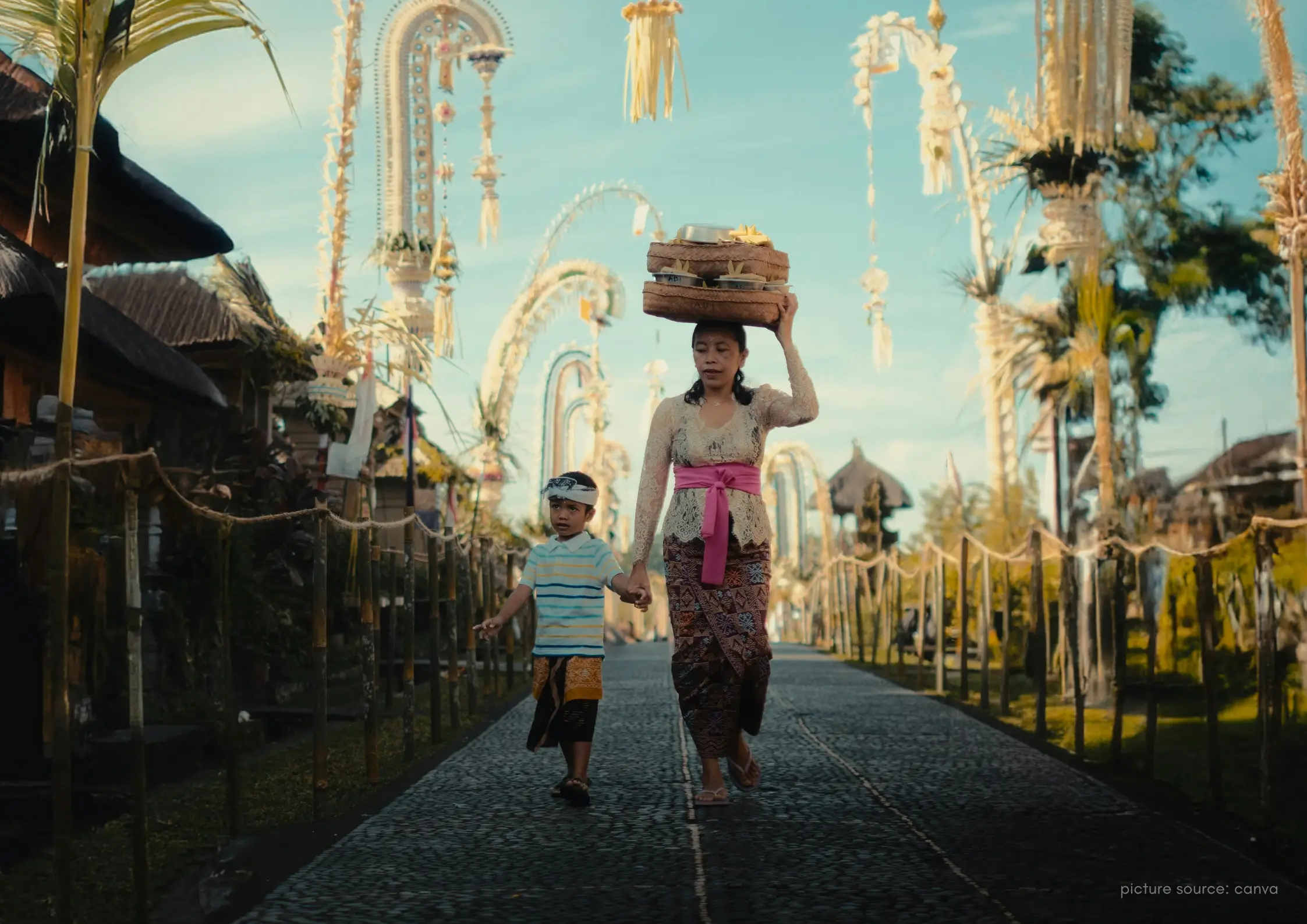
When you stay in one neighborhood for weeks, months, or years, the people living around you become part of your everyday experience. You might see the same family preparing offerings in the morning, meet neighbors on the street, hear activity at the local banjar, or notice preparations for a religious ceremony.
Building a good relationship with your Balinese neighbors does not require you to know every custom or speak fluent Balinese.
A friendly greeting, respectful curiosity, and awareness of the community around you can already make a big difference.
Quick Answer: How Do You Build a Good Relationship With Balinese Neighbors?
The simplest approach is to greet people regularly, learn a few local words, respect religious and community activities, and ask politely when you are unsure about something.
It is also useful to remember that Bali is not culturally identical from one neighborhood to another. Local customs and community rules can vary between villages and banjar, so observing and asking local people is often better than assuming you already know the correct way to behave.
1. Start With a Simple Greeting
One of the easiest ways to become more familiar with your neighbors is also one of the simplest:
Say hello.
You do not need to start with a long conversation.
When you meet someone outside their home or pass them on the street, a smile and a short greeting can gradually make everyday interactions feel more natural.
If you are still learning, Indonesian is perfectly useful:
| Situation | Phrase | Meaning |
|---|---|---|
| Morning | Selamat pagi | Good morning |
| Afternoon | Selamat siang | Good afternoon |
| Later afternoon | Selamat sore | Good late afternoon |
| Thanking someone | Terima kasih | Thank you |
If you would like to try some Balinese, you may hear:
| Balinese | Meaning |
|---|---|
| Rahajeng semeng | Good morning |
| Suksma / Matur suksma | Thank you |
“Rahajeng semeng” is used as a morning greeting in Balinese-language contexts, while suksma is commonly used to express thanks.
You may also frequently hear Om Swastiastu in Bali. It is widely used as a Hindu greeting and in formal or religious contexts. It is better to understand its cultural context rather than treating it simply as the Balinese equivalent of “hi.” The Bali Provincial Government, for example, regularly uses Om Swastiastu to open official addresses.
If you are unsure which greeting is appropriate, a friendly “Selamat pagi” is an easy and respectful place to start.
2. Understand That Your Neighborhood Is Also a Community
To understand daily life in Bali, it helps to know the word banjar.
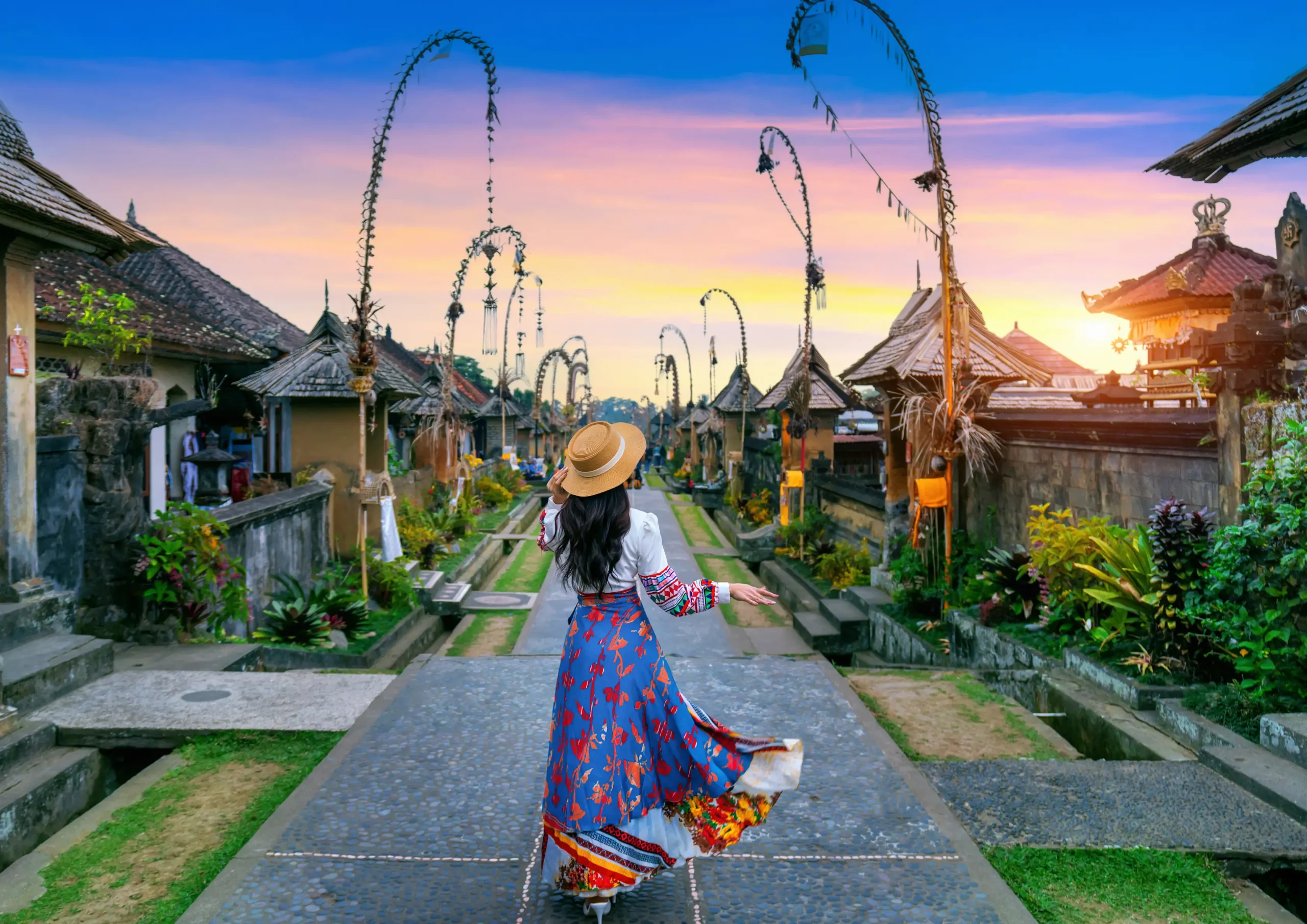
A banjar is more than a geographical neighborhood. In the traditional Balinese community structure, the banjar also has social and religious functions. A bale banjar, for example, may be used for meetings and community activities.
This can explain why you sometimes see many neighbors working together, preparing decorations, gathering at the bale banjar, or participating in community events.
You do not have to become involved in everything happening around you.
But acknowledging that these activities are an important part of community life can help you understand your surroundings better.
Instead of thinking:
“Why is everyone gathering here?”
Try thinking:
“Something important may be happening in the community. I can ask politely.”
That small shift from inconvenience to curiosity can make living in Bali much easier.
3. Small, Consistent Gestures Matter
Good relationships usually do not begin with one impressive gesture.
They develop through regular interaction.
Say good morning when you see your neighbor.
Smile at the person you regularly meet outside their house.
Learn someone’s name if you often speak with them.
Say thank you when someone helps you.
If a neighbor explains something about a ceremony, road access, or local custom, listen rather than immediately comparing it with how things work in your home country.
You do not need to perform Balinese culture perfectly.
Showing that you are interested and respectful is more important than trying to prove that you already understand everything.
This fits with a broader cultural idea often discussed in relation to Bali: Tri Hita Karana, a philosophy concerned with harmonious relationships involving people, the natural world, and the spiritual realm. UNESCO highlights this concept in its description of Bali’s Subak cultural landscape.
For someone living in Bali, the practical lesson can be very simple:
Pay attention to your relationship with the people and environment around you.
4. Notice Offerings Before You Step
One of the first cultural practices newcomers notice in Bali is the presence of small offerings, often including canang sari, around homes, shops, temples, and other spaces.
They may be placed somewhere you would normally walk.
Take a moment to look down and walk around them rather than stepping on or over them carelessly.
Indonesia’s official tourism portal specifically advises visitors to avoid stepping on canang sari and to treat these offerings respectfully.
You do not need to understand the complete meaning of every offering you see.
Simply recognizing that it has religious significance is enough to change how you move around it.
5. Respect Temple Areas
A neighborhood in Bali may have several sacred spaces nearby.
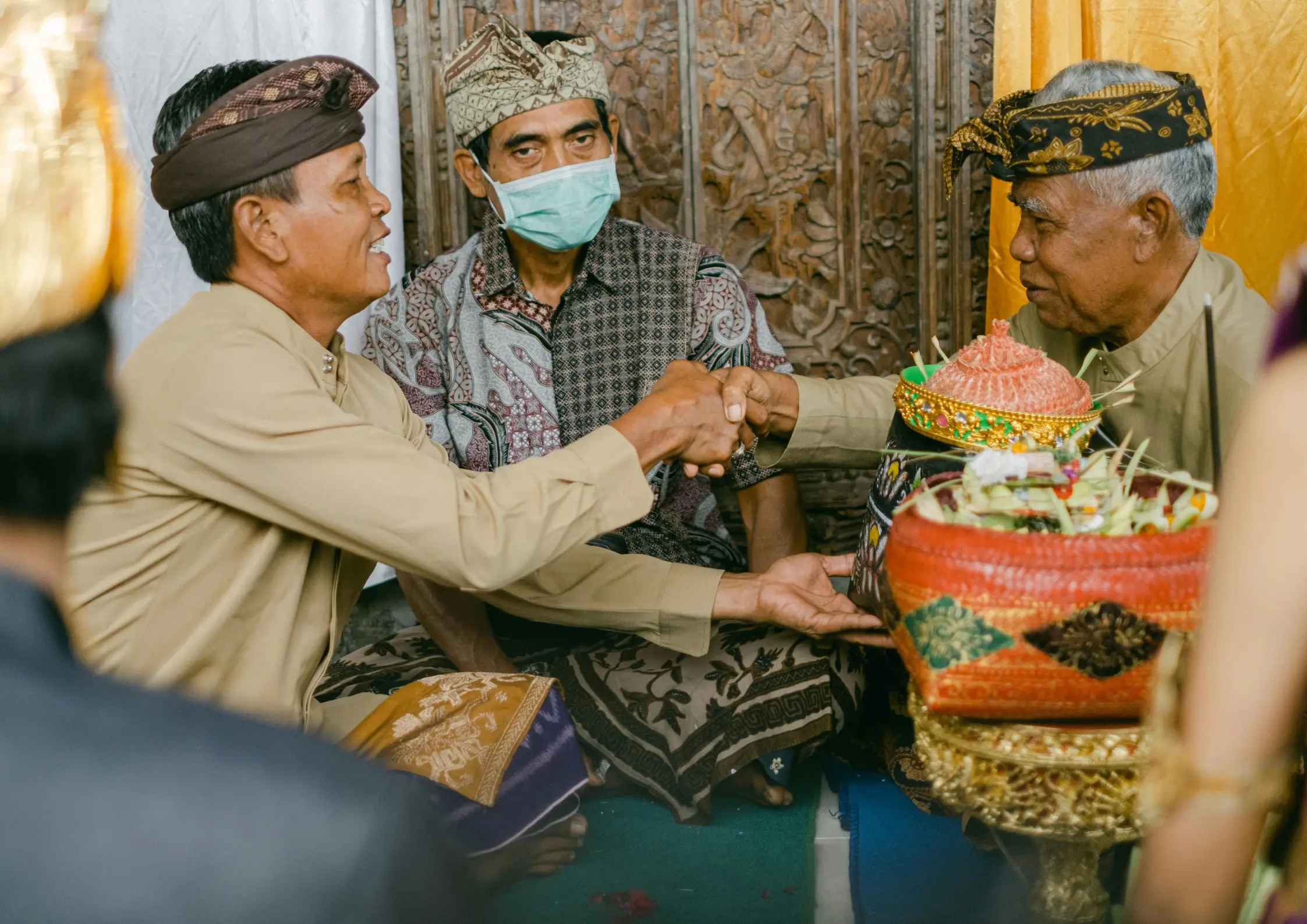
If you are invited to a temple or want to visit one, remember that a pura is first a place of worship, even when it is also open to visitors.
Current Bali guidelines emphasize respecting the sanctity of temples, sacred objects, religious symbols, ceremonies, traditions, and local customs. Visitors are also expected to dress appropriately and behave respectfully in sacred areas.
At many temples, visitors may be asked to wear appropriate traditional clothing such as a sarong and sash. Requirements can vary, so follow the instructions at that particular temple rather than assuming that every temple has exactly the same rules.
The safest rule is:
Observe first. Ask if you are unsure.
For example:
“Excuse me, is it okay if I enter here?”
“Do I need to wear a sarong?”
“Is this area open to visitors?”
Those questions are much better than entering a sacred area simply because the gate is open.
6. Be Careful With Photos During Ceremonies
A ceremony can be visually fascinating, especially if you are new to Bali.
But an interesting photo opportunity for you may be an important religious moment for someone else.
Indonesia’s official tourism information recommends asking permission before photographing ceremonies and respecting situations where photography may not be appropriate.
So before getting very close with your phone or camera, ask yourself:
Am I observing respectfully, or am I interrupting?
If you are uncertain, ask permission.
A short question such as:
“Is it okay if I take a photo?”
can prevent an uncomfortable situation.
7. Don’t Assume Every Neighborhood Works the Same Way
One of the biggest mistakes when learning about Balinese culture is learning one rule and assuming it applies everywhere.
Local customs can differ.
Traditional villages can have their own awig-awig and pararem, or local customary rules and arrangements. Provincial information about Bali’s traditional communities specifically recognizes these local systems and the fact that community organization occurs at the village and banjar level.
That is why someone who has lived in Canggu, for example, should not automatically assume that everything will work exactly the same way in Ubud, Sanur, Karangasem, or another community.
Instead of saying:
“I know how this works in Bali.”
Try:
“How is it usually done here?”
That question is useful not only for culture but also for relationships.
8. Ask Rather Than Guess
You will eventually encounter something you do not understand.
Maybe there is a ceremony outside your house.
Maybe you are invited somewhere and do not know what to wear.
Maybe you see people preparing something at the banjar.
You do not have to search online for every answer.
Sometimes your neighbor is the best person to ask.
Try simple questions such as:
“What is happening today?”
“Is there a ceremony?”
“Can I come and watch?”
“What should I wear?”
“Is there anything I should not do?”
Most importantly, listen to the answer.
Cultural curiosity works best when it comes with humility.
9. Learn a Little Balinese
You can live in Bali using Indonesian and English.
But learning even a small amount of Balinese can create a different kind of connection with local people.
Imagine seeing the same neighbor every morning.
At first you say:
“Good morning.”
Later:
“Selamat pagi.”
And one day:
“Rahajeng semeng.”
It is a small change, but it shows that you have made an effort to understand the place where you live.
You do not need perfect pronunciation.
You also do not need to learn complicated Balinese grammar immediately.
Start with expressions that you can actually use in everyday life.
Greetings, thank-you expressions, simple questions, numbers, food vocabulary, and everyday conversation are much more useful at the beginning than memorizing dozens of words you never use.
What Should You Avoid?
Building good relationships is often less about following a long list of cultural rules and more about avoiding a few habits.
Do not treat a residential neighborhood like a resort where everyone around you is there to provide a service.
Do not assume a ceremony is entertainment.
Do not enter sacred spaces simply because other people are entering them.
Do not photograph people at close range during religious activities without considering whether it is appropriate.
And do not assume that one Balinese friend, driver, teacher, landlord, or neighbor represents every Balinese person.
People are individuals, and local communities have their own practices.
The Best Rule: Be Curious, Not Afraid
People who are new to Bali sometimes become so worried about making a cultural mistake that they avoid interacting with local people altogether.
That does not help much either.
You will probably misunderstand something eventually.
You might pronounce a word incorrectly.
You might ask a very basic question.
That is normal when you are learning another language and culture.
Respect does not mean knowing everything in advance.
It means being willing to observe, listen, ask, and adjust.
And that is often where good relationships begin.
Frequently Asked Questions
How should I greet Balinese neighbors?
For a simple everyday greeting, you can say “Selamat pagi” in the morning. If you want to use Balinese, “Rahajeng semeng” means good morning. A smile and consistent friendly greeting are more important than using complicated language.
Is “Om Swastiastu” the Balinese word for hello?
Not exactly. Om Swastiastu is a Hindu greeting widely used in Bali, including in formal and religious contexts. It should be understood in that context rather than treated simply as a casual replacement for “hello.”
What does “suksma” mean in Bali?
Suksma is commonly used to mean “thank you.” You may also hear “matur suksma.”
What is a banjar in Bali?
A banjar is a local community unit in Bali. Traditional banjar organizations play an important role in social and religious community activities, and the bale banjar often functions as a local meeting and activity space.
What should I do if there is a Balinese ceremony near my home?
Be respectful and observe what local residents are doing. If you are unsure whether you can attend, take photos, pass through an area, or need to dress in a particular way, politely ask a neighbor or community member.
What is basic temple etiquette in Bali?
Dress respectfully, follow instructions at the temple, respect sacred objects and ceremonies, and do not assume every part of a temple is open to visitors. If you are unsure, ask before entering or taking photographs.
Do I need to speak Balinese to have good relationships with my neighbors?
No. You can communicate using Indonesian or English depending on the person. However, learning a few Balinese greetings and everyday expressions can show interest in the local culture and help make interactions warmer.
Is Balinese culture the same everywhere in Bali?
No. There are broader cultural traditions across Bali, but customs and local community practices can vary between villages and banjar. When in doubt, ask how something is done in the community where you live.
A Little Language Can Build a Bigger Connection
Living in Bali gives you the opportunity to experience more than beaches, cafés, and tourist attractions.
It gives you the chance to become part of a neighborhood.
Start small.
Say hello.
Learn people’s names.
Notice what is happening around you.
Respect sacred spaces.
Ask questions.
And learn a few words of the language spoken by the people you meet every day.
Want to connect more naturally with the people around you?
Learn Basic Balinese With Bahasa Bule
Start with practical Balinese for real everyday situations: greetings, polite expressions, simple conversations, and the language you can actually use while living in Bali.
Learn the language. Understand the culture. Feel more at home in Bali.